

August 12, 2013

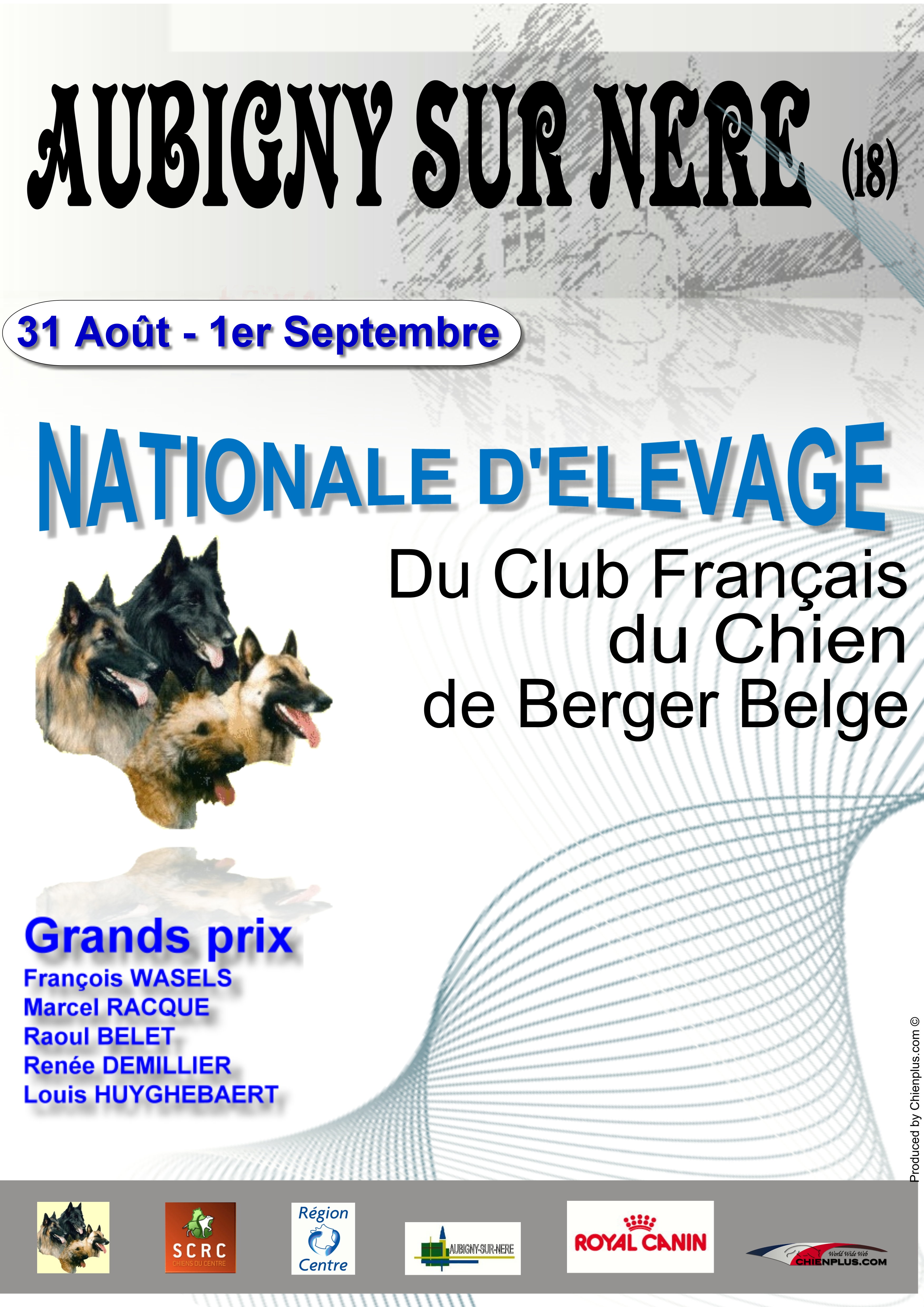
Journée de jeunes et Vétérans 2013

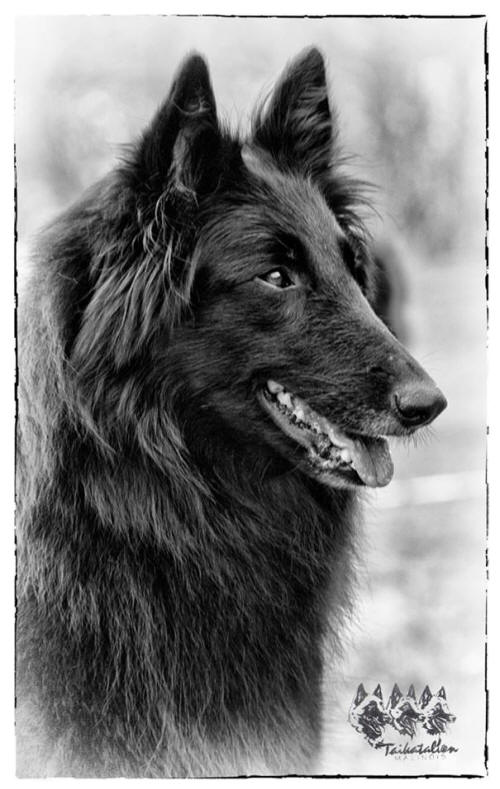
Best groenendael. Quinto de Bruine Buck.
Best malinois Vanille du Crépuscule des Loups.
Canela del Segadal.

August 9, 2013


HBJK Special Show event

HUNGARIAN BELGIAN SHEPHERD CLUB ASSOCIATION - SPECIAL DOG SHOW
Meghívott bíró / Judge: KRIS MALINOWSKI (GB)
Nevezési határidő / Entry deadline: 2013. 09. 06. / 06. 09. 2013.
Nevezési osztályok / Classes
Bébi osztály / Baby class 3-6 hónapos korig / 3-6 months
Kölyök osztály / Puppy class 6-9 hónapos korig / 6-9 months
Fiatal osztály / Young class 9-18 hónapos korig / 9-18 months
Növendék osztály / Intermediate class 15-24 hónapos korig / 15-24 months
Nyílt osztály / Open class 15 hónapos kortól / from 15 months
Munka osztály / Working class 15 hónapos kortól / from 15 months
Győztes osztály / Champion class FCI Champion bizonyítvány (nemzeti vagy nemzetközi) / FCI Champion Certificate
Veterán osztály / Veteran class 8 éves kortól / from 8 years
INFORMÁCIÓK / INFORMATIONS
Nevezési díjak, Entry fee:
1. kutya 4500 HUF 1st dog 40 EU
2. kutyától 4000 HUF Any other dogs 35 EU
Bébi – Kölyök – Veterán osztály 3000 HUF Baby – Puppy – Veteran class 20 EU
Nevezési befizetés / payments:
K & H Bank: 10401921-50526674-52821003
Nevezési cím / entries adress:
Hungária Belga Juhászkutya Klub Egyesület – Ludvai Veronika,
3000 Hatvan, Csokonai út 9/a
E-mail: meoe.hbjk@gmail.com
https://www.facebook.com/events/151195521748436/?fref=ts
August 8, 2013
UNITED BELGIAN SHEPHERD DOG ASSOCIATION 2013 NATIONAL SPECIALTY

2013 NATIONAL SPECIALTY
http://www.ubsda.com/2013nationalspecialty.html
August 7, 2013

August 6, 2013
Health Issues In Toy Dogs
Health Issues In Toy Dogs
Primary Epilepsy in the Toy Dog
by Leanne Bertani
Definition
Primary Epilepsy is a disorder of the brain characterized by recurrent seizures. The exact cause is unknown, but is probably some kind of biochemical or electrical discharge in the brain. It usually presents itself between the age of six months and five years, most commonly prior to the age of three.
Incidence
Epilepsy is a relatively common condition in all dogs, probably occurring in between 1% and 4% of them. A higher incidence has been reported in the beagle, Belgian Tervuren, border collie, boxer, cocker spaniel, collie, dachshund, German shepherd, golden retriever, poodle, Saint Bernard, shetland, Siberian husky, springer spaniel, Welsh corgi, and wirehaired fox terrier. It is not common in dobermans or sight hounds. Most seizures occur when the animal is at rest, so many of them happen early in the morning or late in the evening. For this reason, the incidence of seizures may be underestimated in dogs residing in kennels. Some owners have also reported an increase in seizure activity if the dog is very excited. Partial seizure disorders may be more common than generalized seizure disorders.
Types Of Seizures And Their Symptoms
The current categorization of seizures divides them into (a) generalized, and (b) partial. A generalized seizure involves the entire brain; a partial seizure only involves part of the brain.
Generalized seizures (used to be called "Grand Mal") are bilateral and symmetrical (involve both sides of the body) and include loss of consciousness. During a generalized seizure, the dog will usually become stiff, chomp its jaw, and salivate profusely. The seizure may be accompanied by urinating, defecating, making noise or paddling of the feet.
A partial seizure (previously known as Petit Mal) is generally milder. The symptoms can be so subtle that the seizure goes unrecognized. Symptoms can include a "wide-eyed look" or vacant stare, drooling, staggering, trembling, movement of one limb, or even biting at imaginary flies.
Some dogs recover immediately; others may have several hours of confusion, sleepiness, or restlessness after a seizure.
Stages Of A Seizure
Prodrome and Aura: occasional changes in behavior prior to a seizure, such as restlessness, whining, salivating or just wanting to be held.
Ictus: actual physical activity of the seizure, usually causing increased muscle tone or movement, commonly lasting 1-3 minutes
Postictus: usually lasts less than 24 hours; may include pacing, eating and drinking voraciously, acting deaf or blind, or just being more quiet than usual.
What To Do When Your Dog Has A Seizure
The dog probably has no memory of the event, so the seizure is likely to be more terrifying to watch than it is to experience. The best thing you can do for your dog is to remain calm and in control, so that when he comes out of the seizure, he won't sense your anxiety.
As long as the seizure lasts less than five minutes, you don't really have to do anything but keep your dog from flailing into hard objects. If the dog is at risk of injury, move him to a safe place, such as on a rug or blanket, and protect him from other dogs if necessary.
Some owners prefer to hold their dogs during the seizure, but be aware that the need for oxygen may be greater during a seizure so it is important not to constrict the chest or obstruct air flow. Do not attempt to restrict movement of the extremities, and do not put your hands into the dog's mouth. A towel on the lap may help protect from any spontaneous excrement.
After the seizure is over, take your cue from the dog. If he prefers to be alone, let him rest in a crate or in a corner. If he wants to be with you, keep him in a calm environment. Any panic or excitement in your voice may increase the dog's confusion. Record the date and duration of the seizure on a calendar, so that you can share that information with your veterinarian.
If you suspect that the seizure may be due to hypoglycemia, (for instance, in a young puppy or a thin dog that hasn't been eating well) try administering a small amount of sugar (in the form of Nutrical, frosting, syrup, etc) into the pouch of the mouth when it is over, followed by a protein snack such as cheese or a dog biscuit when he is able to eat.
While simple carbohydrates are preferred to treat hypoglycemia, I don't agree with the practice of routine administration of simple carbohydrates to prevent hypoglycemia. This practice causes wild fluctuations in blood sugar and insulin production, and may cause a rebound hypoglycemia. A hypoglycemia-prone dog would be much better served by more frequent feeding of protein and complex carbohydrate meals.
At The Vet's Office
A single seizure is generally not an emergency. The only time you need to rush to the vet is when a seizure lasts for more than five minutes, or if it occurs in a lactating female, or a very young puppy in which an infection such as distemper is suspected. Multiple seizures in the same day also require an emergent veterinary visit. Otherwise, visit the veterinarian at the earliest convenience.
If there has only been one seizure and the dog is in the normal age range for the onset of epilepsy, then nothing more than an exam may be done at the initial veterinary visit. If the dog is out of the usual age range, or there are abnormalities on physical exam, the veterinarian may begin to look for other causes of seizures. Possible tests that could be done include thyroid function tests, glucose tolerance tests, electroencephalograms, blood test for lead poisoning, spinal taps to look for distemper or other infectious disease, or CT scan or MRI.
The diagnosis of Primary Epilepsy is established by ruling out other causes of seizures. If the first seizure occurs between the ages of one and three years of age, Primary Epilepsy is the most likely cause. Other (secondary) causes are hypoglycemia, hydrocephalus and liver shunt (especially in a puppy), or brain tumor and cardiac arrhythmia (particularly in the elderly dog). Less common causes include metabolic disorders such as hypothyroidism, toxins, infections, autoimmune problems, heat stroke, head trauma, parasites, vitamin deficiency, low serum calcium, liver or kidney failure or other causes of blood chemistry abnormalities.
Cluster Seizures And Status Epilepticus
Although the majority of seizures due to Primary Epilepsy aren't life-threatening, there are a couple conditions that require aggressive medical attention. The first is "cluster seizures", a condition where the seizures occur at regular intervals of 1-4 weeks. This condition is more common in larger breed dogs, and Valium is a common treatment.
The second, and more critical, emergency is "status epilepticus", a continuous seizure lasting more than five minutes, or two or more seizures with incomplete recovery time between them. This condition usually responds to oxygen and intravenous valium, but can occasionally result in death.
Breeding Advice
Primary Epilepsy has been shown to be inherited in some breeds. The mode of inheritance is probably not the same in all breeds. Studies done in the late 90's suggest that it may be autosomal recessive in Keeshonds, polygenic with one gene of major influence in Belgian Tervurens, and polygenic recessive in Golden Retrievers. It is thought by some that generalized seizures are more likely to have a genetic origin than partial seizures.
It is probably unwise to repeat a breeding that has resulted in a dog with Primary Epilepsy, and certainly unwise to use an epileptic animal in a breeding program unless one is prepared for the consequences. Test breedings of epileptic sires and dams have produced incidences of epilepsy from between 38 percent (outcrosses) to 100% (mating of two epileptic siblings).
Delaying the first breeding of related dogs until after the age of three may allow time for a larger percentage of epileptic dogs to be diagnosed.
If epilepsy is a major problem in a breeding program, then experts suggest refraining from using siblings of epileptic animals. If you must breed a sibling, do not breed that sibling to any first-degree relative of an epileptic dog or to a dog that has produced an epileptic dog. In the words of Jerold S. Bell, D.V.M. and Clinical Assistant Professor of Genetics, Tufts University School of Veterinary Medicine, "Find a low risk mate, breed, and replace her in the breeding program (not in your heart or home) with a quality offspring."
Treatment
If a specific cause for a seizure is found on examination, then the seizure is not due to Primary Epilepsy, but is considered to be "secondary", and the treatment is directed to the cause. If no cause is found, the first seizure is not usually treated. In general, most veterinarians will not medicate for Primary Epilepsy unless there is more than one seizure every 4-8 weeks, or unless the dog has cluster seizures or status epilepticus.
There is some evidence that seizure frequency continues to increase if left untreated (ie. that the brain "learns" to seizure, or that seizures have a "kindling" effect), so most dogs that have an epileptic seizure more than every 4 weeks or so should be put on medication. Phenobarbital is the most commonly used medicine. It is usually given in the form of a pill, twice a day. Blood levels may be required to find the optimal dosage, and blood tests may also be done to monitor for side effects to the liver. The most common side effects are sedation, increased thirst and appetite, and weight gain.
Another drug that is frequently used, either alone or in combination with Phenobarbital, is Potassium Bromide. If those two medications aren't helpful, a veterinary neurologist is sometimes consulted. Other medications that might be useful are primidone (Mylepsin & Mysoline), phenytoin (Dilantin), valproic acid (Valproate, Depekene), carbamazine (Tegretol), felbamate (Felbatol) and gabapentin (Neurontin).
The Seizure Threshhold
Estrogen appears to lower the seizure threshhold. If an intact female develops epilepsy, spaying may be helpful.
It is thought by some that vaccines may lower the seizure threshhold. Ask your veterinarian to individualize a vaccine program for your dog. Some measures that might be taken include separating the administration of individual vaccines by several weeks, and less frequent administration of vaccines for viral diseases.
If an epileptic dog is scheduled for surgery, be certain that the staff knows about the epilepsy. Some anesthetics may decrease seizure threshhold, so the anesthetist should choose the anesthetic accordingly.
Prognosis
There is currently no cure for Primary Epilepsy in canines, but medications can decrease the frequency, duration and severity of the seizures Dogs that become epileptic prior to the age of two don't respond to medication quite as well as dogs that develop epilepsy later in life, but small breeds tend to be more responsive to the medications than larger breeds, and in most cases, can be kept under sufficient control to enjoy a long and happy life.
Research is ongoing in hopes of finding genetic markers for Primary Epilepsy. Hopefully there will come a day when a cheek swab will tell us whether or not a particular brood bitch or stud dog carries genes for epilepsy, and the disorder will become a thing of the past. If epilepsy is a major problem in your breed, consider asking your breed club to fund research via the Canine Health Foundation.
August 5, 2013
The Epilepsy Underground
The Epilepsy Underground
First published in Australian Shepherd Journal, vol 13 issue 4, July/August, 2003
by Lynn Fremuth
Epilepsy can impact a breeder even when none of her dogs is affected nor has produced a single affected offspring. This is an aspect of dealing with suspected epilepsy that's too frequently downplayed, but which increasing numbers of breeders may very soon face.
Knowing that one of your dogs has a near-relative that had seizure disorder brings with it a host of difficult decisions.
Initially, trying to uncover the reason for the seizures themselves typically ends in a roadblock or a shrug of the shoulders from the owner/breeder of the dog in question. "Yes, she produced affected offspring, but we don't think it was 'really' epilepsy. It was probably from something else." Or, "Yes, he produced affected offspring, but if you voice it around, you'll ruin his stud career." Or, "Yeah, she had a seizure, but we're pretty sure it was from a bump on the head."
The owner of an otherwise outstanding individual which happens to have near relatives that either produced seizures or were, themselves, affected, must decide how to proceed with her own breeding goals. Frequently, the knowledge of the seizures puts one into an untenable position. Being open with those who inquire can lead to strong criticism, or even ostracism, from other breeders with related dogs. One finds herself wondering, "Should I say anything? Certainly that person must know already...? Maybe not. It's not my part to tell. The breeder should've done that."
Most problematic is personal knowledge of a stud dog that's produced an affected littermate or half-sibling of your own dog. How does one make a subjective decision about the risk of passing on the chance of epilepsy if the choice is made to breed your non-affected offspring of that stud?
In my personal experience, I addressed the issue differently for my prospective stud dog than for my prospective brood bitch, both of which were close relatives of dogs who may have been affected by primary epilepsy.
When I started receiving stud inquiries about my male, he was three years old and unaffected by seizure disorder. However, because of the knowledge I had, I considered it my duty to inform prospective bitch owners of his affected near relative. I made it clear that the cause of the seizures was not clear, that the lines were common and used extensively, and that my dog showed no indication of primary epilepsy or any other type of seizure disorder. This was information that I would've wanted divulged had I been seeking a stud for my own bitch.
My dog did sire one litter, the owner of which was fully aware of the situation with seizures in his relatives. It was a top and bottom linebreeding, which produced no affected individuals. None of the other interested parties chose to breed to my dog. I realized that offering him was a Catch-22 for me. I could keep quiet, which the owners of his relatives were doing, and earn stud fees. Or I could be forthright, and have him rejected in favor of (ironically) other studs who were closely related to him.
I chose to quietly discourage prospective bitch owners who inquired about my stud, telling them he was not available to "outside bitches." I didn't intend to breed him to my own bitch, so he was effectively removed from the breeding population. His near relatives continued to be used in various breeding programs. His sire was used for several more years. I have no information, though, on whether or not there's a higher than expected incidence of primary epilepsy in those dogs' descendants as a result.
My bitch was another matter. I knew that many of her near relatives, as my stud's, were actively used in breeding programs. I made the decision to breed her after she was three years old, and to do a total outcross in an effort to avoid doubling up possible "source dogs" for the undiagnosed seizures in her near relatives.
It was an extremely difficult decision, but I was prepared to take total responsibility for the pups that were produced. To be honest, I knew that my bitch was far superior to many of her relatives that were being bred, and it made no sense to "martyr" her on the chance that she might produce seizures.
She went on to produce twelve pups. I waited until her first litter was three years old and showed no indication of seizure disorder before breeding her again, to a different stud. I then bred her one final time a year later to the stud who sired her first litter, due to an unforeseen loss of the dog I'd kept from her first litter.
Eleven of her offspring were from the first sire, producing an "outcross on an outcross" litter. None of those eleven pups is affected, and none of their descendants (now in the fourth generation beyond my bitch) are affected.
The twelfth pup was from her second litter, a linebreeding to a different stud. When I initially inquired to the stud owner, asking specifically for information about epilepsy, I was told that nothing had "come up" in his previous litters or in any of his near relatives. I knew of a possible genetic link in both his and my bitch's shared pedigree, but went ahead with the cross. As I said, the lines were popular and extensively used. Very few people were (and are) willing to be open about epilepsy, so then, as now, much is done on faith.
I have recently learned that the stud produced a later offspring with primary epilepsy. The stud dog's owner did not inform me of this when it came to light. In speaking with an acquaintance who had used the dog at stud, I found that his owner had not provided that information to her, either. It's that sort of secrecy that makes informed breeding decisions next to impossible. However, when I told this acquaintance that the stud had produced affected offspring, which would be half-sibs to her own pups, I got a chilly rather than grateful reply. Most people prefer not to know about the presence of primary epilepsy in their dogs' relatives.
I immediately informed the owner of the single pup that resulted from the breeding of that stud to my bitch. I have no information about the health status of that pup (now seven years old), but her owner has other dogs closely related to both my bitch and the stud dog. It was essential that she be aware of the bitch's affected half-sibling.
In closing, there are many people who are struggling with knowledge of epilepsy, in much-used lines and in individual dogs, that isn't generally available to other breeders. The pressure to keep the knowledge "confidential" is almost overwhelming. The best one can hope is to build a relationship of trust among others with knowledge, and who are willing to share, via what I think of as The Epilepsy Underground. This can be a blessing and a curse. The blessing is in being able to make truly informed breeding choices. With knowledge, one can look at a pedigree and have a better idea of the probabilities that a particular cross will bring two "carriers" (for lack of a better word) together.
It's fascinating, but alarming, to research pedigrees of affected lines and try to apply that knowledge to one's own breeding plans. At times, it seems as if there's nowhere to run and nowhere to hide. If more breeders would be willing to openly share their experiences—both positive and negative—with breeding dogs from affected lines, the pool of knowledge would be invaluable. As a result, the stigma would be ripped away, and the breed would be on the road to stemming the increase of this awful disease.
We cannot simply toss out all dogs who are related to producers or affected individuals. We have to take informed, cautious chances. What works? What's disastrous? Can we start to pinpoint genetic "streams" from related individuals that seem "clean," despite the presence of primary epilepsy in near relatives? Can we pinpoint other "streams" that seem to produce a greater number of affected dogs than random probability would expect?
The curse of possessing knowledge of epilepsy in one's lines comes from the extreme pressure one is placed under to keep the information confidential. I find myself always wondering if a particular breeder or owner "knows" or even wants to "know."
And I can no longer look at pedigrees the same way the "blissfully ignorant" do.
First published in Australian Shepherd Journal, vol 13 issue 4, July/August, 2003
by Lynn Fremuth
Epilepsy can impact a breeder even when none of her dogs is affected nor has produced a single affected offspring. This is an aspect of dealing with suspected epilepsy that's too frequently downplayed, but which increasing numbers of breeders may very soon face.
Knowing that one of your dogs has a near-relative that had seizure disorder brings with it a host of difficult decisions.
Initially, trying to uncover the reason for the seizures themselves typically ends in a roadblock or a shrug of the shoulders from the owner/breeder of the dog in question. "Yes, she produced affected offspring, but we don't think it was 'really' epilepsy. It was probably from something else." Or, "Yes, he produced affected offspring, but if you voice it around, you'll ruin his stud career." Or, "Yeah, she had a seizure, but we're pretty sure it was from a bump on the head."
The owner of an otherwise outstanding individual which happens to have near relatives that either produced seizures or were, themselves, affected, must decide how to proceed with her own breeding goals. Frequently, the knowledge of the seizures puts one into an untenable position. Being open with those who inquire can lead to strong criticism, or even ostracism, from other breeders with related dogs. One finds herself wondering, "Should I say anything? Certainly that person must know already...? Maybe not. It's not my part to tell. The breeder should've done that."
Most problematic is personal knowledge of a stud dog that's produced an affected littermate or half-sibling of your own dog. How does one make a subjective decision about the risk of passing on the chance of epilepsy if the choice is made to breed your non-affected offspring of that stud?
In my personal experience, I addressed the issue differently for my prospective stud dog than for my prospective brood bitch, both of which were close relatives of dogs who may have been affected by primary epilepsy.
When I started receiving stud inquiries about my male, he was three years old and unaffected by seizure disorder. However, because of the knowledge I had, I considered it my duty to inform prospective bitch owners of his affected near relative. I made it clear that the cause of the seizures was not clear, that the lines were common and used extensively, and that my dog showed no indication of primary epilepsy or any other type of seizure disorder. This was information that I would've wanted divulged had I been seeking a stud for my own bitch.
My dog did sire one litter, the owner of which was fully aware of the situation with seizures in his relatives. It was a top and bottom linebreeding, which produced no affected individuals. None of the other interested parties chose to breed to my dog. I realized that offering him was a Catch-22 for me. I could keep quiet, which the owners of his relatives were doing, and earn stud fees. Or I could be forthright, and have him rejected in favor of (ironically) other studs who were closely related to him.
I chose to quietly discourage prospective bitch owners who inquired about my stud, telling them he was not available to "outside bitches." I didn't intend to breed him to my own bitch, so he was effectively removed from the breeding population. His near relatives continued to be used in various breeding programs. His sire was used for several more years. I have no information, though, on whether or not there's a higher than expected incidence of primary epilepsy in those dogs' descendants as a result.
My bitch was another matter. I knew that many of her near relatives, as my stud's, were actively used in breeding programs. I made the decision to breed her after she was three years old, and to do a total outcross in an effort to avoid doubling up possible "source dogs" for the undiagnosed seizures in her near relatives.
It was an extremely difficult decision, but I was prepared to take total responsibility for the pups that were produced. To be honest, I knew that my bitch was far superior to many of her relatives that were being bred, and it made no sense to "martyr" her on the chance that she might produce seizures.
She went on to produce twelve pups. I waited until her first litter was three years old and showed no indication of seizure disorder before breeding her again, to a different stud. I then bred her one final time a year later to the stud who sired her first litter, due to an unforeseen loss of the dog I'd kept from her first litter.
Eleven of her offspring were from the first sire, producing an "outcross on an outcross" litter. None of those eleven pups is affected, and none of their descendants (now in the fourth generation beyond my bitch) are affected.
The twelfth pup was from her second litter, a linebreeding to a different stud. When I initially inquired to the stud owner, asking specifically for information about epilepsy, I was told that nothing had "come up" in his previous litters or in any of his near relatives. I knew of a possible genetic link in both his and my bitch's shared pedigree, but went ahead with the cross. As I said, the lines were popular and extensively used. Very few people were (and are) willing to be open about epilepsy, so then, as now, much is done on faith.
I have recently learned that the stud produced a later offspring with primary epilepsy. The stud dog's owner did not inform me of this when it came to light. In speaking with an acquaintance who had used the dog at stud, I found that his owner had not provided that information to her, either. It's that sort of secrecy that makes informed breeding decisions next to impossible. However, when I told this acquaintance that the stud had produced affected offspring, which would be half-sibs to her own pups, I got a chilly rather than grateful reply. Most people prefer not to know about the presence of primary epilepsy in their dogs' relatives.
I immediately informed the owner of the single pup that resulted from the breeding of that stud to my bitch. I have no information about the health status of that pup (now seven years old), but her owner has other dogs closely related to both my bitch and the stud dog. It was essential that she be aware of the bitch's affected half-sibling.
In closing, there are many people who are struggling with knowledge of epilepsy, in much-used lines and in individual dogs, that isn't generally available to other breeders. The pressure to keep the knowledge "confidential" is almost overwhelming. The best one can hope is to build a relationship of trust among others with knowledge, and who are willing to share, via what I think of as The Epilepsy Underground. This can be a blessing and a curse. The blessing is in being able to make truly informed breeding choices. With knowledge, one can look at a pedigree and have a better idea of the probabilities that a particular cross will bring two "carriers" (for lack of a better word) together.
It's fascinating, but alarming, to research pedigrees of affected lines and try to apply that knowledge to one's own breeding plans. At times, it seems as if there's nowhere to run and nowhere to hide. If more breeders would be willing to openly share their experiences—both positive and negative—with breeding dogs from affected lines, the pool of knowledge would be invaluable. As a result, the stigma would be ripped away, and the breed would be on the road to stemming the increase of this awful disease.
We cannot simply toss out all dogs who are related to producers or affected individuals. We have to take informed, cautious chances. What works? What's disastrous? Can we start to pinpoint genetic "streams" from related individuals that seem "clean," despite the presence of primary epilepsy in near relatives? Can we pinpoint other "streams" that seem to produce a greater number of affected dogs than random probability would expect?
The curse of possessing knowledge of epilepsy in one's lines comes from the extreme pressure one is placed under to keep the information confidential. I find myself always wondering if a particular breeder or owner "knows" or even wants to "know."
And I can no longer look at pedigrees the same way the "blissfully ignorant" do.

August 4, 2013

August 3, 2013


Subscribe to:
Posts (Atom)